A Guide to Online Casino Payments
Let's be honest, the success of any online casino comes down to one simple, crucial thing: how easy it is for players to get their money in and out. In the fiercely competitive iGaming world, having smooth online casino payments isn't just a nice-to-have feature—it’s the bedrock of player trust and loyalty.
This guide will walk you through the entire world of modern casino payment solutions. We'll cover everything from traditional banking and e-wallets to the exciting frontier of cryptocurrency, giving you the insights to build a payment strategy that doesn’t just work, but wins.
The Core Engine of Online Gaming Success
Think of your online casino like a high-performance sports car. Your games are the slick design, and the bonuses are the turbo boost. But the payment system? That’s the engine. If that engine sputters, stalls, or is a pain to use, players will just hop into a different car. A smooth, dependable, and versatile payment system is what keeps the whole operation running and fuels long-term growth.
This isn't just a feeling; the numbers back it up. The global online gambling market, which runs entirely on effective online casino payments, is expected to explode from USD 105.5 billion in 2025 to a staggering USD 286.4 billion by 2035. This kind of growth makes it crystal clear: operators who fail to provide a frictionless financial experience will be left in the dust. You can dive deeper into these trends by checking out the full online gambling market report from Future Market Insights.
Why Payment Options Matter More Than Ever
Not too long ago, just offering credit card payments was probably enough. Those days are over. Today’s players are savvy, and their expectations are sky-high. A smart payment strategy has to serve a global audience with a wide range of preferences for speed, privacy, and convenience.
Here’s why a top-notch payment system is absolutely non-negotiable:
- It Builds Player Trust: A clear and efficient payment process is the very first trust signal you send. When players feel confident they can deposit and, more importantly, withdraw their funds without a headache, their trust in your platform soars.
- It Boosts Conversion Rates: Clunky or limited payment options create friction, and friction kills conversions. Every single failed deposit is a customer you just lost. Offering multiple, user-friendly methods directly increases the chances of a player funding their account.
- It Gives You a Competitive Edge: In a sea of look-alike casinos, an outstanding payment setup can make you stand out. Offering things like instant withdrawals or accepting new payment types like crypto can attract high-value, tech-forward players that your competitors can't.
At its core, an online casino's payment system is a direct reflection of its commitment to the player. It’s not just about moving money; it’s about creating a secure, seamless, and trustworthy environment that keeps players coming back.
Understanding Traditional Fiat Payment Methods
When you think about paying for anything online, your mind probably jumps to the old standbys first. These traditional fiat methods are the bedrock of online casino payments—the familiar options most players have used for years. They're the well-paved, universally understood highways of the financial world. They get you where you need to go, even if they aren't always the fastest or most efficient route.
The most common players in this space are, of course, credit and debit cards. Giants like Visa and Mastercard dominate because they’re just so easy to use. Nearly every potential customer has a card, and they know exactly how to use it. There’s no new app to download or account to create; they just punch in their numbers and they're ready to hit the tables.
But there's a big catch. Banks and financial institutions are notoriously skittish about gambling transactions, thanks to regulations like the Unlawful Internet Gambling Enforcement Act (UIGEA) in the US. This caution often leads to a high rate of declined transactions, which is incredibly frustrating for a player when their bank blocks a payment to a perfectly legal, licensed casino.
Credit and Debit Cards: The Double-Edged Sword
For any casino operator, accepting card payments is simply a must-have. They're too popular to ignore. But building your entire payment strategy around them is a shaky proposition. A declined deposit isn't just a failed transaction; it's often a lost customer who loses faith in your platform and goes elsewhere.
Let's break down the good and the bad:
-
Pros:
- Universal Acceptance: Almost every online casino takes major credit and debit cards.
- User Familiarity: Players don't need instructions. It’s a process they already know well.
- Instant Deposits: The money usually appears in a player's account right away.
-
Cons:
- High Decline Rates: Banks often block payments, leading to frustrated players and lost revenue.
- Chargeback Risks: Operators are vulnerable to players disputing charges, which can be costly.
- Slower Withdrawals: Getting winnings back onto a card can take several business days to clear through the banking system.
The real problem with card payments is the friction. The convenience is undermined by the unpredictability of banks acting as gatekeepers, making cards an unreliable foundation for a modern iGaming operation.
Bank and Wire Transfers: The Secure Slow Lane
On the other side of the traditional coin, you have bank and wire transfers. If cards are the quick, everyday option, think of wire transfers as the armored truck—slower and more methodical, but incredibly secure. These methods move money directly between a player's bank account and the casino's.
That direct connection makes them one of the most secure online casino payments out there. It’s why high rollers often prefer them for moving large amounts of cash. The built-in verification steps protect both the player and the operator from fraud.
Of course, that security comes at a price: speed. A wire transfer can take anywhere from 3 to 7 business days to land. For a player hyped up and ready to jump into a live tournament, that kind of wait is a deal-breaker. Withdrawals are just as slow, so these methods won't work for players who want fast access to their winnings. While they have their place, these traditional options are just one piece of a much larger payment puzzle.
How E-Wallets Changed the Game for Casino Payments
While traditional bank and card payments got the ball rolling for online casinos, it was the arrival of e-wallets that really shook things up. Services like PayPal, Skrill, and Neteller introduced a layer of speed and privacy that players didn't even know they were missing. They function as a digital middleman, creating a secure bridge between a player's bank account and the casino.
Think of it like a digital valet. Instead of handing your actual credit card to the casino, you give your funds to the valet (the e-wallet). The valet then pays the casino on your behalf, never revealing your sensitive banking details.
This separation is the key. By shielding a player’s personal financial information, e-wallets drastically cut down the risk of direct exposure during a data breach, offering a peace of mind that direct card payments simply can't.
The Need for Speed and Privacy
The two biggest reasons e-wallets took off in the iGaming world were speed and privacy. Deposits are almost always instant, letting players top up their accounts and jump into a game in seconds. That kind of immediacy is a huge factor in keeping players happy and engaged.
But the real magic happens with withdrawals. A standard card withdrawal can easily take a few business days to navigate the old-school banking system. With an e-wallet, players often see their winnings in their account within hours. Getting your hands on your money quickly is a massive draw for any player.
On top of that, e-wallets solve the privacy problem. The casino only ever sees the e-wallet account details, not a player’s bank account number or personal card information. For many in the online gaming community, that discretion is non-negotiable.
E-wallets solved the two biggest pain points of traditional banking in iGaming: slow withdrawal times and direct exposure of personal financial data. They offered a user-centric solution that prioritized both speed and security.
The demand for these smoother payment options is a huge driver of the market’s growth. In 2025, online casinos are on track to bring in around $38.43 billion in revenue, with user numbers expected to climb to nearly 140 million by 2029. This boom is powered by platforms that deliver the seamless financial experience e-wallets are known for. You can dive deeper into the financials of the online casino industry to see just how much payment efficiency impacts the bottom line.
Balancing the Good with the Bad
Of course, nothing is perfect. The main trade-off with e-wallets is the fees. Most services charge small percentages for things like funding your wallet, moving money back to your bank, or converting currencies.
These fees might seem small, but for players who make frequent transactions, they can definitely add up. Another thing to watch out for is that some casinos don't allow players who deposit with certain e-wallets to claim welcome bonuses. It’s a measure to prevent bonus abuse, but it's something both players and operators need to be aware of when weighing the benefits.
Comparing Popular E-Wallet Options
Not all e-wallets are built the same. The best choice often comes down to where you are and which casinos you use. To help clear things up, here’s a look at how the top e-wallets stack up against each other for casino payments.
Comparing Popular E-Wallets for Online Casinos
This table breaks down the key features of the leading e-wallets used in iGaming, helping operators and players see which option best fits their needs for speed, cost, and availability.
| E-Wallet | Average Deposit Time | Average Withdrawal Time | Common Fees | Key Benefit |
|---|---|---|---|---|
| PayPal | Instant | 0-48 Hours | Currency conversion, cross-border fees | Widely trusted brand with robust security and buyer protection policies. |
| Skrill | Instant | 0-24 Hours | Deposit, withdrawal, and currency fees | Popular in iGaming with broad acceptance and a dedicated loyalty program. |
| Neteller | Instant | 0-24 Hours | Deposit and withdrawal fees | A long-standing favorite in the online gambling industry, known for reliability. |
Ultimately, the rise of e-wallets was a turning point for online casino payments. They shifted the entire industry’s focus toward a faster, more secure, and player-friendly experience—a standard that continues to shape expectations today.
Taking a Look at Crypto for Casino Payments
Just as e-wallets raised the bar for speed, cryptocurrencies have shown up to completely redefine what’s possible for online casino payments. This isn't just another way to move money around; it’s a ground-up rethinking of finance that offers incredible privacy, speed, and global access for players and operators alike.
Currencies like Bitcoin (BTC), Ethereum (ETH), and stablecoins such as Tether (USDT) all run on a technology called the blockchain. At its core, the blockchain is a digital record book—a decentralized and public list of every transaction. Picture it like a shared notebook that everyone involved can see, but once an entry is made, it’s permanent and can’t be erased or changed.
That very structure is what gives crypto its power. Instead of a single bank controlling and verifying everything, a whole network of computers does the job. This makes transactions incredibly secure and transparent. For a casino, this means you get a payment system that exists completely outside the old-school banking world, avoiding its typical delays and roadblocks.
The Real-World Advantages of Crypto Payments
For players, the perks are obvious right away. Crypto payments skip the banking system entirely, which means deposits and withdrawals happen almost instantly. A player can move their winnings from their casino account to their personal wallet in a matter of minutes, not days. Even the quickest e-wallets have a hard time keeping up with that.
On top of that, cryptocurrencies give players a level of privacy that the gaming community really values. They can make transactions without handing over sensitive personal or financial details to the casino, which feels a lot safer. For any casino operator thinking about this, getting a handle on the technology is key. You can find a complete guide to blockchain development that dives much deeper into how it all works.
For operators, the benefits are equally strong, especially when it comes to one of the biggest headaches in the business: chargebacks.
Because blockchain transactions are irreversible, the problem of chargebacks is essentially eliminated. Once a payment is confirmed by the network, it’s final. It can’t be disputed or clawed back, which protects operators from a huge source of fraud and lost revenue.
The Most Popular Coins in Online Gaming
There are thousands of cryptocurrencies out there, but only a handful have really taken hold in the online casino world. These are the ones players trust and use the most, so knowing them helps you decide which ones to support.
- Bitcoin (BTC): The original and still the king. Bitcoin is known for its rock-solid security and massive brand recognition, making it a non-negotiable for any casino that wants to be seen as crypto-friendly.
- Ethereum (ETH): Ethereum is more than just digital money. Its network can run "smart contracts," which are self-executing agreements. This opens the door to creating more advanced and automated payment features on your platform.
- Stablecoins (e.g., USDT, USDC): These coins are pegged to a stable asset, usually the US dollar. They give you all the speed and security of crypto but without the wild price swings. They're perfect for players who want to hold a balance without gambling on the crypto market itself.
How Crypto Payment Gateways Make It All Easy
The thought of wrestling with blockchain technology can be daunting for any operator. But here's the good news: you don't have to be a tech genius to make it work. A specialized crypto payment gateway is the missing piece that makes this powerful tech a simple, plug-and-play addition to your site.
Think of a gateway like ATLOS as your universal translator. It takes all the complicated blockchain stuff happening on the back end and turns it into a straightforward interface for you and your players. It looks and feels just like any other payment processor. Your players pay with their favorite coin, and the gateway does all the heavy lifting.
This approach gives you a few major wins:
- Simple Integration: A good gateway provides a simple API that your developers can plug into your existing platform with very little fuss.
- Multi-Coin Support: Instead of managing separate digital wallets for dozens of different coins, a single gateway lets you accept a huge variety of them.
- No KYC Required: Services like ATLOS let merchants receive crypto directly to their own wallets without going through lengthy account approvals or Know Your Customer (KYC) checks, so you can get started right away.
- Go Global Instantly: Crypto has no borders. By adding a gateway, you can immediately start taking payments from players anywhere in the world, without getting tangled up in complex international banking rules.
At the end of the day, adding cryptocurrencies to your casino’s payment options is no longer just a cool feature for a niche audience. It’s becoming an essential move for any platform that wants to attract players globally, cut down on operational costs, and offer the fastest, most secure payment experience on the market.
Navigating Security and Regulatory Compliance
In the online casino world, trust isn't just a nice-to-have; it's the bedrock of your entire business. Players are handing over their personal data and hard-earned money, and they need to feel completely confident that both are safe. This is where a serious commitment to security and regulation separates the pros from the pretenders.
Think of managing your casino's payments like building a digital vault. Every single transaction needs to be protected. This starts with the fundamentals, the security measures that players now see as the bare minimum. Skipping these isn't just a financial risk—it can destroy your reputation for good.
Core Security Protocols for Player Protection
Before a player even thinks about making a deposit, they're looking for signs that your site is secure. Two technologies are absolutely non-negotiable for protecting player data and earning that initial trust.
- SSL Encryption: Secure Sockets Layer (SSL) is what creates a secure, encrypted link between a player's device and your server. It's like sending sensitive information through a sealed, armored tunnel. Passwords, credit card numbers, and personal details get scrambled, making them useless to anyone trying to intercept them.
- Two-Factor Authentication (2FA): A password just doesn't cut it anymore. 2FA adds a critical second step, asking players to verify their identity with something only they have, like a code sent to their phone. It’s a simple but incredibly effective measure that can block over 99.9% of account hijacking attempts.
Understanding Key Regulatory Hurdles
Beyond the tech, you have to navigate a maze of financial regulations designed to stamp out illegal activity. These aren't just hoops to jump through; they’re essential for keeping the iGaming industry clean and creating a safe space for players.
Compliance isn’t about slowing down business—it's about building a business that lasts. Rules like KYC and AML are the guardrails that protect the industry from fraud, money laundering, and other financial crimes.
Two of the most important frameworks you'll encounter are:
- Know Your Customer (KYC): This is all about verifying who your players are. By collecting documents like a government ID and a utility bill, you confirm they are who they claim to be. It’s a crucial step in preventing underage gambling, identity theft, and bonus abuse.
- Anti-Money Laundering (AML): AML rules mean you have to keep an eye on financial activity for anything that looks suspicious. This involves spotting unusual deposit or withdrawal patterns and reporting them to the proper authorities. Regulations like the Unlawful Internet Gambling Enforcement Act (UIGEA) even require banks to block payments to illegal gambling sites, which makes having a solid AML system non-negotiable.
Comparing Security Across Payment Methods
Not all payment methods are created equal when it comes to security. Each comes with its own set of built-in protections and compliance baggage.
If you accept credit cards, for instance, you have to comply with the Payment Card Industry Data Security Standard (PCI DSS). It’s a notoriously strict set of rules for handling card information.
E-wallets provide an extra layer of privacy by acting as a middleman, meaning your casino never sees the player's bank account details directly. But cryptocurrencies offer a completely different model. Blockchain transactions are locked in by advanced cryptography, which makes them incredibly tough to fake or reverse. This decentralized system also puts a stop to chargeback fraud—a huge pain point for operators—because every transaction is final. Understanding these nuances is key to building a secure and compliant payment ecosystem that players will trust for the long haul.
Building Your Optimal Payment Strategy
Figuring out the right mix of payment options for your online casino isn't about throwing everything at the wall to see what sticks. It's about being strategic. A one-size-fits-all approach is a recipe for failure in a global market where player preferences can vary wildly. The secret is to build your payment infrastructure around your target audience—who they are, where they live, and how comfortable they are with different kinds of tech.
This means you have to go deeper than just a checklist of payment methods. For example, if you're trying to attract a younger, global crowd of digital natives, you absolutely need to have cryptocurrencies and popular e-wallets front and center. But if your focus is on a specific country or region, you'd better make sure you offer the local payment solutions everyone there already uses and trusts. Otherwise, you're shutting the door on your core market before they even get a chance to play.
Ultimately, this all comes back to a core principle in iGaming: security and player trust are two sides of the same coin. This visual breaks it down beautifully.
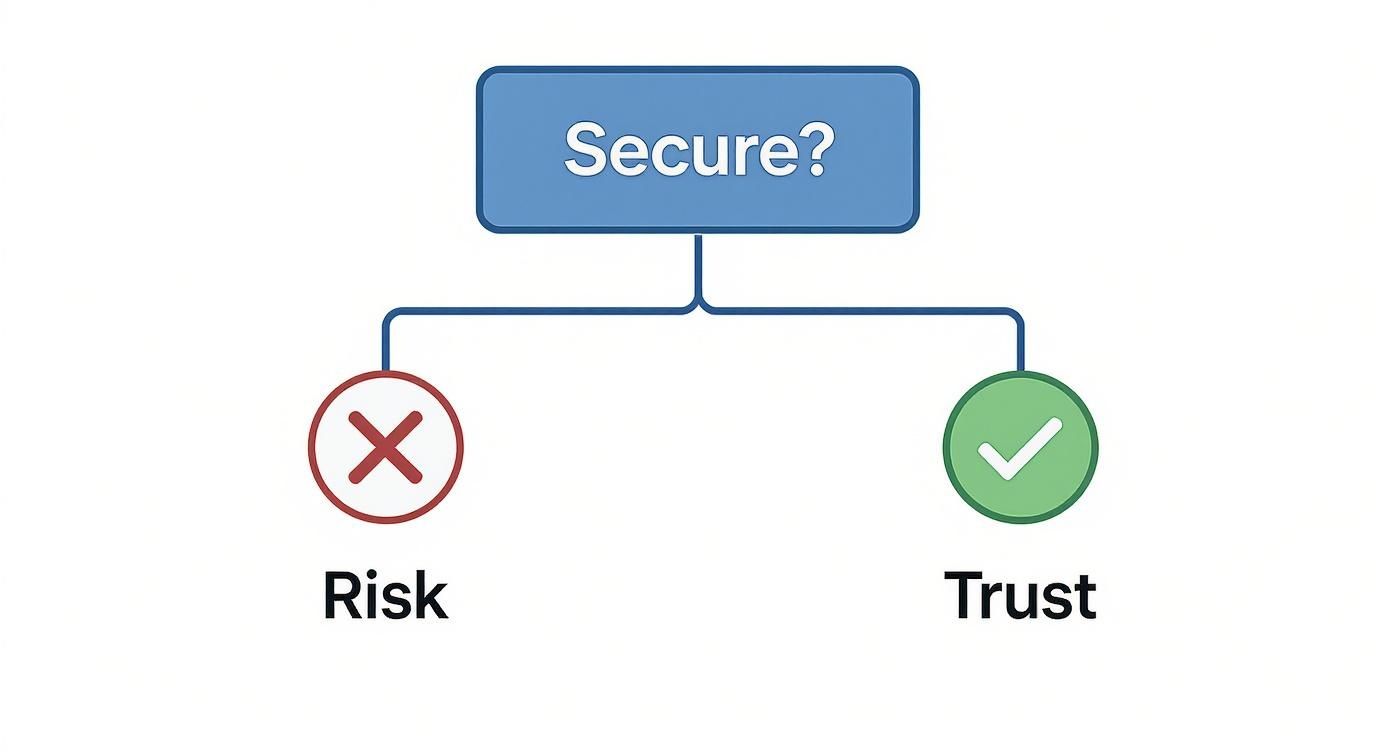
As you can see, every decision you make about payment security has a direct line to player trust. In this business, trust isn't just a nice-to-have; it's everything.
Analyzing Your Target Audience
Your first move should be to get a crystal-clear picture of your ideal player. Are you targeting a younger generation that lives on their phone and uses digital wallets for everything? Or is your demographic more comfortable with traditional bank transfers? Knowing the answer is the key to creating a payment system that feels natural and easy for them to use.
Start by asking yourself a few critical questions:
- Where are my players coming from? Payment habits in Asia are completely different from those in Europe or North America.
- How tech-savvy are they? Are they early crypto adopters, or will they be confused by anything beyond a credit card input screen?
- What are their spending habits? Do they prefer making lots of small, quick deposits, or are they high rollers making fewer, larger transactions?
Evaluating Transaction Costs and Speed
Once you know who you're building for, it's time to look at the numbers. Every payment method has its own cost structure, from processing fees and currency conversion rates to the ever-present risk of chargebacks. These expenses chip away at your profit margins, so they need careful consideration.
Speed is just as critical. We live in an on-demand world, and players expect their money instantly. Slow withdrawals are one of the fastest ways to lose a customer for good.
The real challenge is finding that perfect balance. You need a mix of payment options that keeps your operational costs low while delivering the speed and convenience that today’s players expect. Nailing this is what separates a good payment strategy from a great one.
Getting this right is more important than ever, especially with the iGaming market booming. In the United States, total commercial gaming revenue hit a staggering $51.14 billion as of August 2025—an 8.9% jump from the year before. Online gaming specifically saw revenue spike by 27.5% in May 2025, with iGaming revenue alone climbing 33%. You can dig into the numbers in the latest commercial gaming revenue report.
This kind of explosive growth means the competition is fierce. By carefully tailoring your payment options to your audience and weighing the costs, you’re not just moving money around. You're building a powerful tool that helps you win new players and, more importantly, keep them coming back.
Frequently Asked Questions
When it comes to online casino payments, a few key questions always seem to pop up for operators and players alike. Getting straight answers is crucial for building trust and ensuring everything runs smoothly. Here, we'll tackle some of the most common queries we hear.
Think of this as a quick-reference guide to help clear up any confusion around security, withdrawal speeds, and adding new payment tech.
Key Payment Inquiries
What is the most secure payment method for online casinos?
That’s the million-dollar question, and the answer isn't a single method—it’s about layers of security. On one hand, cryptocurrencies offer fantastic security through their underlying cryptography and give players a degree of anonymity. On the other, established e-wallets are a great choice because they act as a middleman, meaning you never expose your banking details directly to the casino.
Even traditional bank transfers are very secure, though they are notoriously slow. The real key to security is choosing a reputable casino that encrypts its traffic (look for SSL) and, most importantly, always using two-factor authentication (2FA) on your own payment accounts. That extra step is your best personal line of defense.
Why do some online casino withdrawals take so long?
Slow withdrawals are usually a mix of the payment method's speed and the casino's own internal procedures. For instance, card and bank transfers have to clear through legacy banking systems, which is why they can often take 3-5 business days. E-wallets are much faster, typically clearing in under 24 hours.
Cryptocurrency withdrawals are usually the fastest of all, with funds often hitting a player's wallet in a matter of minutes. But remember, a casino's internal checks, like required Know Your Customer (KYC) and Anti-Money Laundering (AML) verifications, can add time to any withdrawal, regardless of the method used.
The speed of your withdrawal often comes down to the technology behind the transaction. Modern solutions like crypto bypass the old, slow systems, delivering a much faster experience for players who want quick access to their winnings.
Integrating Modern Solutions
How difficult is it to add crypto payments to an online casino?
If you were trying to build it from the ground up, it would be a massive undertaking. But that’s not how it works anymore. Today, specialized crypto payment gateways handle all the heavy lifting.
Think of it like plugging in a new feature. These services offer a simple API that lets an operator start accepting crypto just like any other payment option. It completely removes the technical barrier, making it surprisingly straightforward to cater to the growing number of players who prefer using crypto for their online casino payments.
Ready to offer your players the speed and security of cryptocurrency without the technical headaches? ATLOS provides a seamless, no-KYC crypto payment gateway that integrates directly into your platform, allowing you to accept global payments instantly. Learn more and get started today at https://atlos.io.